
Volcanoes are among the most fascinating and destructive natural forces on our planet. They shape landscapes, create new land, influence climate, and remind humanity of Earth’s immense internal power. Some volcanoes are admired for their beauty, while others are feared for their catastrophic eruptions. Over thousands of years, volcanoes have played a crucial role in Earth’s geological evolution.
In this article, we will explore the Top 10 Volcanoes in the World, focusing on their history, location, activity, and global significance. These volcanoes are famous not only for their eruptions but also for their scientific, cultural, and environmental importance.
Table of Contents: Top 10 Volcanoes in the World
Mount Vesuvius – Italy
Mount Vesuvius is one of the most famous and dangerous volcanoes in the world. Located near Naples, Italy, it is best known for its catastrophic eruption in 79 AD, which buried the Roman cities of Pompeii and Herculaneum under ash and lava.
Vesuvius is still considered an active volcano, and millions of people live nearby, making it one of the most closely monitored volcanoes on Earth. Its historical impact and ongoing threat place it firmly among the Top 10 Volcanoes in the World.
Mount Fuji – Japan
Mount Fuji is not only a volcano but also a powerful cultural symbol of Japan. Standing at 3,776 meters, it is the highest mountain in the country. Although Mount Fuji is currently dormant, it is classified as an active volcano due to its past eruptions.
Its perfectly symmetrical cone, snow-capped peak, and spiritual significance attract millions of visitors every year. Mount Fuji’s beauty and geological importance make it one of the most iconic volcanoes on Earth.
Also Read – Top 10 stadiums in the United States
Mount Etna – Italy
Located on the island of Sicily, Mount Etna is the most active volcano in Europe. It has been erupting continuously for thousands of years and is one of the most studied volcanoes in the world.
Despite frequent eruptions, the surrounding land is extremely fertile, supporting vineyards and agriculture. Mount Etna demonstrates how volcanic activity can be both destructive and beneficial, earning its place among the Top 10 Volcanoes in the World.
Mount Kilimanjaro – Tanzania
Mount Kilimanjaro is Africa’s highest peak, rising to 5,895 meters above sea level. It is a dormant volcano composed of three volcanic cones: Kibo, Mawenzi, and Shira.
Although it has not erupted for thousands of years, Kilimanjaro remains geologically significant. Its glaciers, diverse ecosystems, and iconic silhouette make it one of the most famous volcanic mountains in the world.
Mount St. Helens – United States
Mount St. Helens gained global attention after its massive eruption in 1980, which was one of the deadliest volcanic events in U.S. history. The eruption reshaped the landscape, destroyed forests, and caused significant loss of life.
Today, Mount St. Helens serves as a natural laboratory for scientists studying volcanic recovery and ecosystem regeneration. Its dramatic history makes it one of the most important volcanoes in modern times.
Also Read – Top 10 football player in the united states
Krakatoa – Indonesia
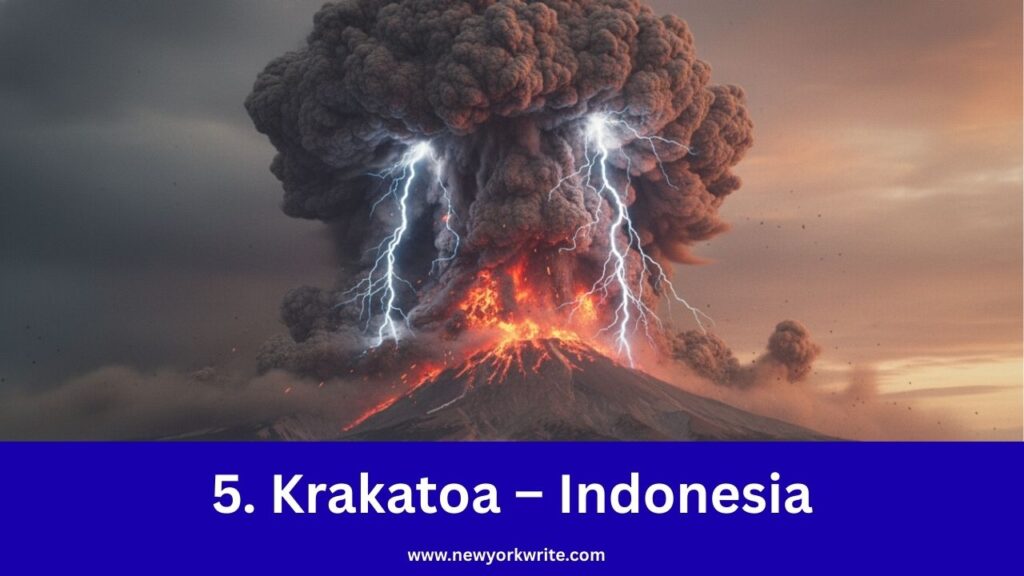
Krakatoa is legendary for its 1883 eruption, one of the most violent volcanic explosions ever recorded. The blast was heard thousands of kilometers away and caused massive tsunamis that killed over 36,000 people.
After the eruption, a new volcanic island called Anak Krakatau (“Child of Krakatoa”) emerged and remains active today. Krakatoa’s explosive power secures its place in the Top 10 Volcanoes in the World.
Mount Pinatubo – Philippines
Mount Pinatubo’s 1991 eruption was one of the largest volcanic events of the 20th century. It released enormous amounts of ash and sulfur dioxide into the atmosphere, temporarily lowering global temperatures.
This eruption demonstrated how volcanoes can influence the Earth’s climate on a global scale. Today, Mount Pinatubo is closely monitored and remains a key site for volcanic research.
Mount Merapi – Indonesia
Mount Merapi is one of the most active and dangerous volcanoes in the world. Located in central Java, Indonesia, it erupts frequently and poses a constant threat to nearby communities.
Despite the danger, people continue to live near Merapi because volcanic soil is highly fertile. Its frequent activity and human impact make it one of the most studied volcanoes globally.
Popocatépetl – Mexico
Popocatépetl is one of Mexico’s most active volcanoes and is located near Mexico City, one of the largest urban areas in the world. Regular emissions of ash and gas require constant monitoring.
Because of its proximity to millions of people, Popocatépetl is considered extremely dangerous. Its activity highlights the risks of living near active volcanic regions.
Yellowstone Caldera – United States
Yellowstone is not a typical cone-shaped volcano; it is a supervolcano. Located beneath Yellowstone National Park, it has the potential to produce eruptions thousands of times more powerful than ordinary volcanoes.
Although it has not erupted in hundreds of thousands of years, scientists continue to monitor it closely. A future eruption could have global consequences, making Yellowstone one of the most powerful volcanoes on Earth.
Why the Top 10 Volcanoes in the World Matter
The Top 10 Volcanoes in the World are important because they:
- Reveal the power of Earth’s interior
- Shape landscapes and create new land
- Influence climate and ecosystems
- Help scientists understand geological processes
- Affect human history and civilizations
Volcanoes remind us that Earth is a dynamic, ever-changing planet.
Conclusion
Volcanoes are both creators and destroyers. They have wiped out ancient cities, changed climates, and shaped continents, yet they also provide fertile soil, new land, and valuable scientific knowledge. From Mount Vesuvius to Yellowstone, each volcano on this list tells a unique story about Earth’s past and future.
The Top 10 Volcanoes in the World represent the most powerful examples of nature’s raw energy. Understanding them helps humanity prepare for future eruptions while appreciating the incredible forces that continue to shape our planet.
What is the most dangerous volcano in the world?
Mount Vesuvius and Yellowstone are considered among the most dangerous due to population density and eruption potential.
Is Mount Fuji still active?
Mount Fuji is currently dormant but classified as an active volcano due to past eruptions.
Can volcanoes affect global climate?
Yes, large eruptions can release gases and ash that temporarily cool the Earth’s climate.
What is a supervolcano?
A supervolcano is capable of producing extremely large eruptions with global consequences, such as Yellowstone.
Why do people live near volcanoes?
Volcanic soil is very fertile, making it ideal for agriculture despite the risks.